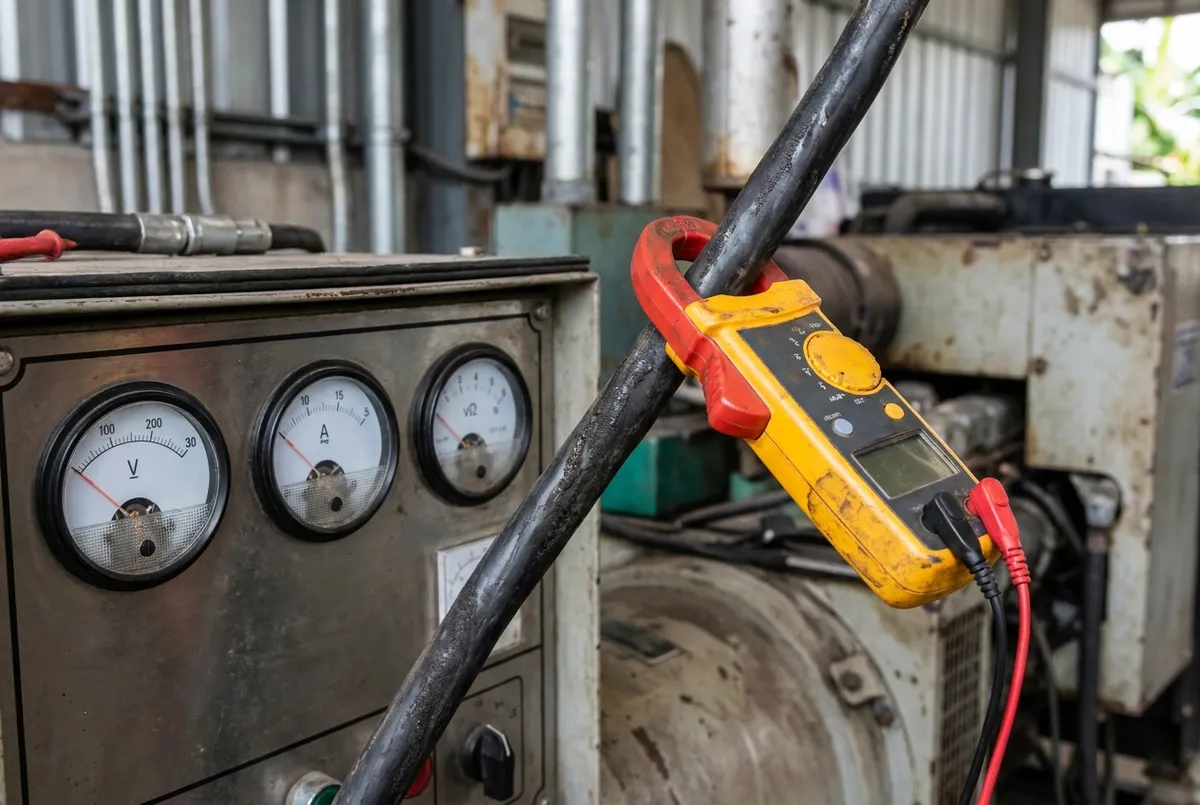
A villa owner in Sanur once told me his genset was 'tested weekly' — the gardener started it every Friday, let it idle ten minutes, shut it down. At the first real blackout it carried the villa for four minutes and tripped on temperature at barely 60% load. Years of idle running had glazed the cylinders and gummed the injectors — classic wet stacking, invisible at idle, instant at load. A load bank test is one afternoon and answers the only question that matters about standby power: will it hold the full load, for hours, when everything depends on it?
What's Included
Load Bank Testing
Resistive load banks step your genset from 25% to 100% of rated output while we log voltage, frequency, oil pressure and temperatures at each stage. Weak cooling, tired injectors and AVR drift all show themselves under real load.
Commissioning of New Installations
Full acceptance testing for newly installed gensets: load steps, transient response when big loads slam on, ATS changeover timing, and protection-shutdown verification. The handover document your installer should have given you.
Wet-Stacking Recovery
Standby units that have idled for years get a controlled high-load run regime to burn off carbon and unglaze cylinders — often restoring full output without opening the engine at all.
Reports & Compliance
Stamped written reports with the full data table — what insurers ask for after a claim, what hotel groups require annually, and what a serious buyer wants before purchasing a property with a genset.
Pricing (IDR)
| Service | Guide Price (IDR) | Notes |
|---|---|---|
| Load bank test, up to 60 kVA | 1,500,000 – 3,000,000 | 2–4 hours, written report |
| Load bank test, 60–200 kVA | 3,000,000 – 6,000,000 | Larger bank, full protocol |
| New installation commissioning | 2,000,000 – 4,000,000 | Incl. ATS changeover testing |
| Annual test contract | Quote per site | Hotels, villa fleets, clinics |
How We Work
Schedule
WhatsApp the genset rating and location. Units up to 60 kVA: our standard bank covers it, usually same week.
Pre-Test Inspection
Oil, coolant, fuel and battery check first — a load test on a sick engine helps nobody.
Stepped Loading
25% → 50% → 75% → 100% of rated kVA, holding each step while logging the electrical and thermal numbers.
Analysis On Site
We walk you through the data in plain language: what is healthy, what is drifting, what needs attention before it becomes a 2 a.m. failure.
Written Report
Stamped report with the full table within 24 hours — for your records, your insurer or your hotel group's auditor.
FAQ
Why test a generator that runs fine every week?
How long does a load test take?
What is wet stacking?
How often should a standby generator be load tested?
Generator Coverage in Bali
We provide this service across all of south and central Bali:
Need This Sorted?
WhatsApp us your details — you get a straight assessment and a fixed quote back the same day. Emergency callouts run 24/7.
Order in WhatsApp